Emerald
BerylJewelryWiki Editorial·5 sources·Reviewed 2026-08-04
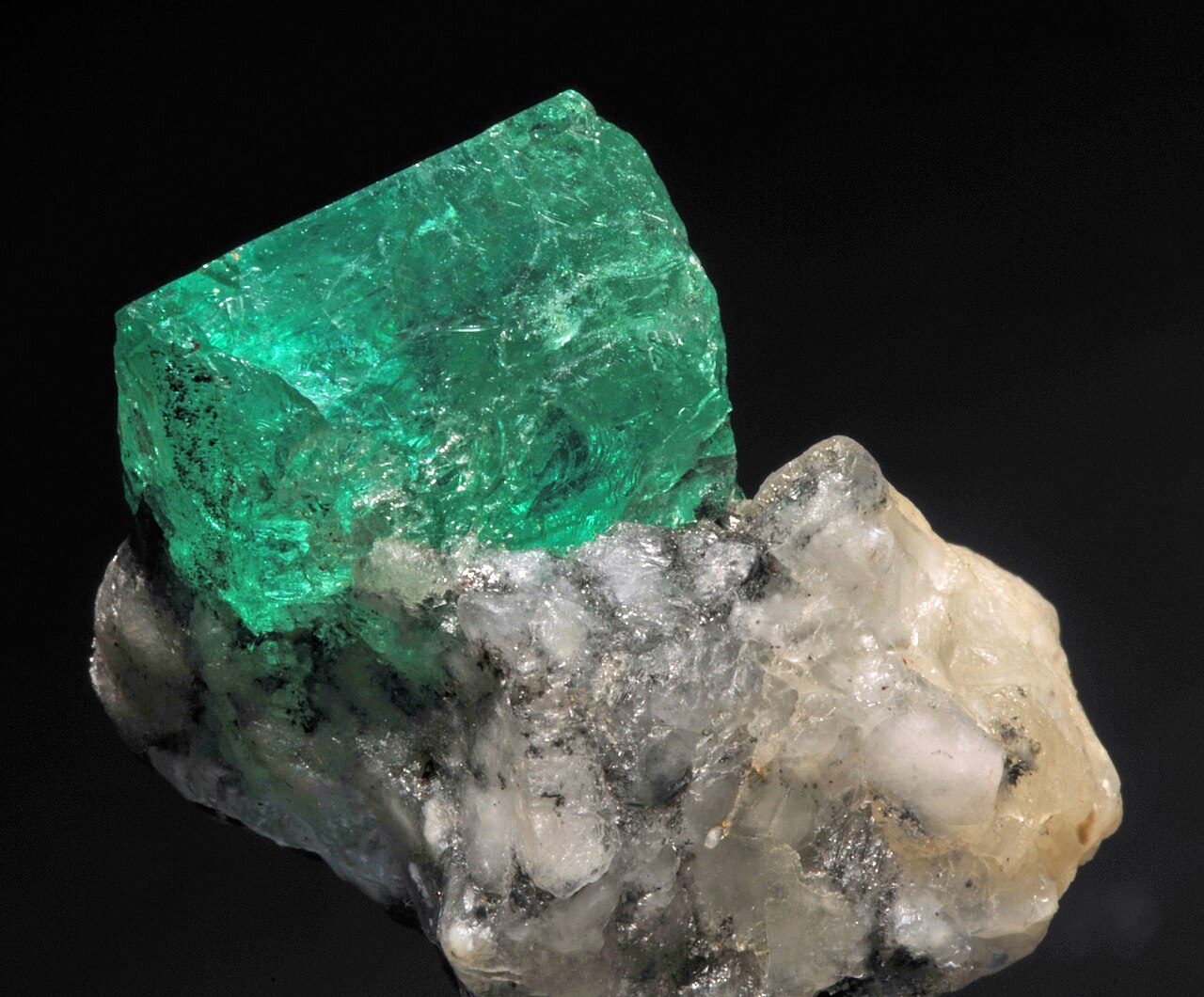
Hardness says it is fine for a ring; toughness and fracture filling say otherwise. The gap between those two answers is why this page exists.
Properties
| Property | Value | Authority |
|---|---|---|
| Mohs hardness | 7.5 to 8 [1] | — |
| Toughness | Fair to good — requires more care in wear than ruby or sapphire, and can chip or crack under rough handling or significant impact. [1] Toughness, not hardness, is what decides daily-wear suitability. | — |
| Specific gravity | 2.67–2.78 [2] | — |
| Chemical formula | Be3Al2Si6O18 Read from the species entry, Beryl. A variety shares its species’ formula — unlike hardness or density, which vary with composition and are not inherited here. [5] | — |
| Crystal system | Hexagonal [4] Read from the species article, Beryl. | — |
| Common treatments | Fracture filling with oil, resin or wax is routine; GIA notes estimates that 90 percent or more of emeralds are fracture-filled. Treatments must be disclosed to the buyer. [1] | — |
| Suitability for daily wear | Wearable daily only with care and a protective setting. The limiting factor is fair-to-good toughness plus near-universal fracture filling, not the Mohs figure. [1] | — |
| Care cautions | Ultrasonic and steam cleaning are risky: ultrasonic vibration can weaken already-fractured stones, and hot steam can make oil or unhardened resin sweat out of the fractures. Warm soapy water with gentle scrubbing is the safe method. [1] | — |
| Birthstone month | May [3] | — |
Sources
- GIA — Emerald Care and Cleaning Guide — Gemological Institute of America (GIA, Emerald Care & Cleaning)
- International Gem Society — reference charts (Mohs hardness, specific gravity, refractive index) — International Gem Society (IGS reference charts)
- Jewelers of America — Birthstones — Jewelers of America (Jewelers of America, Birthstones)
- Wikipedia — mineral article infoboxes (crystal system) — Wikipedia contributors (Wikipedia mineral infoboxes)
- Handbook of Mineralogy — Mineral Data Publishing / Mineralogical Society of America (Handbook of Mineralogy, Mineral Data Publishing)