Aquamarine
BerylJewelryWiki Editorial·5 sources·Reviewed 2026-08-04
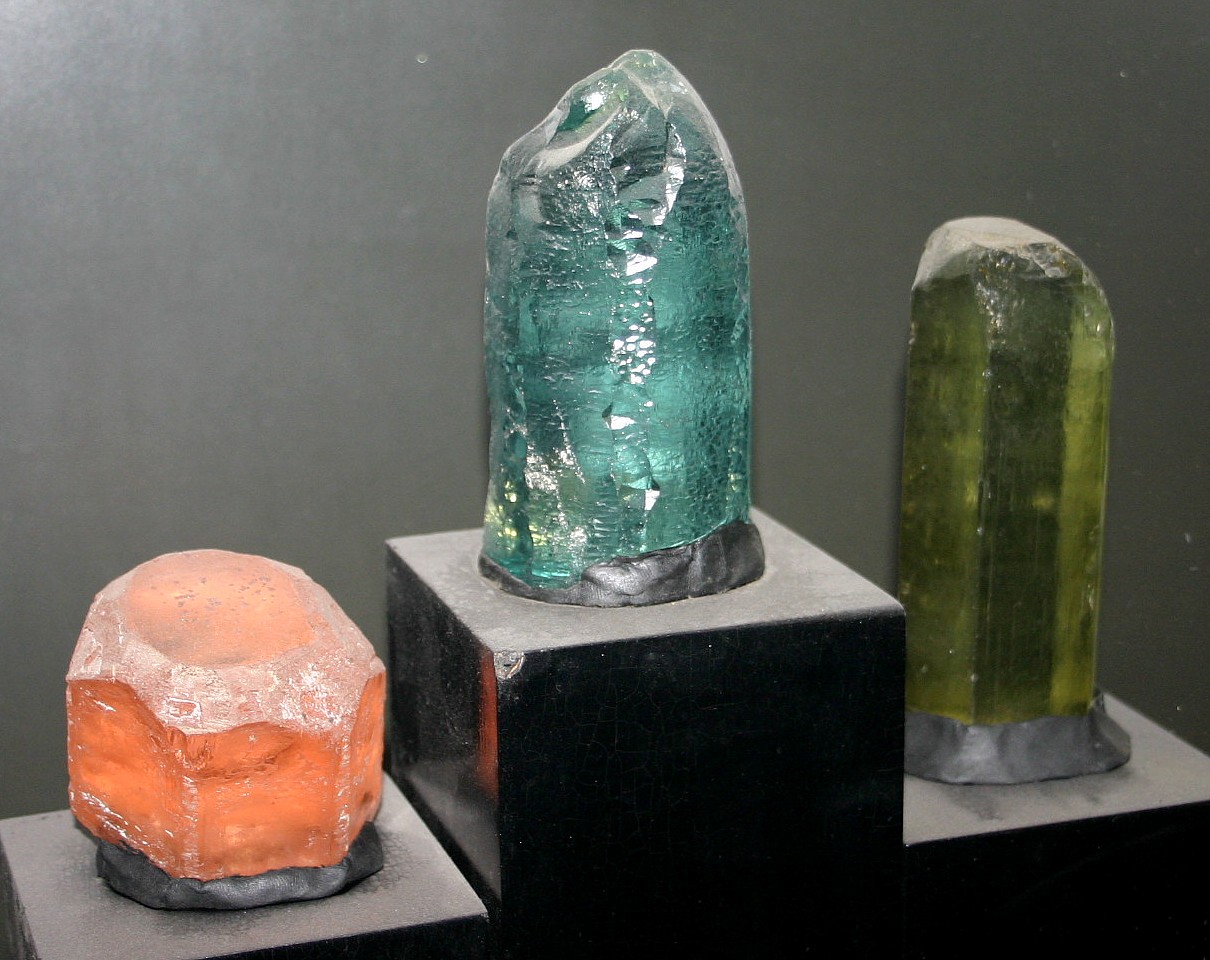
The same mineral species as emerald — beryl — but without the fractures that make emerald fragile, which is why it wears far better for the same hardness.
Properties
| Property | Value | Authority |
|---|---|---|
| Mohs hardness | 7½–8 [1] | — |
| Specific gravity | 2.68–2.74 [1] | — |
| Chemical formula | Be3Al2Si6O18 Read from the species entry, Beryl. A variety shares its species’ formula — unlike hardness or density, which vary with composition and are not inherited here. [5] | — |
| Crystal system | Hexagonal [3] Read from the species article, Beryl. | — |
| Common treatments | Commonly heated. Much aquamarine is blue-green as mined, and controlled heating removes the greenish component to produce a purer blue. GIA also lists aquamarine among the durable transparent gems whose surface-reaching fractures can be filled with resins or glasses, though it notes this is less prevalent than the other treatments. As a beryl, it can also be irradiated to deepen colour — and GIA warns that irradiated colour in beryl tends to be short-lived and fades in bright light. [4] | — |
| Care cautions | Heated stones may be slightly more brittle. If the colour was induced by irradiation rather than heat, expect it to fade in bright light. [4] | — |
| Birthstone month | March [2] | — |
Sources
- International Gem Society — reference charts (Mohs hardness, specific gravity, refractive index) — International Gem Society (IGS reference charts)
- Jewelers of America — Birthstones — Jewelers of America (Jewelers of America, Birthstones)
- Wikipedia — mineral article infoboxes (crystal system) — Wikipedia contributors (Wikipedia mineral infoboxes)
- GIA — An Introduction to Gem Treatments — Gemological Institute of America (GIA, An Introduction to Gem Treatments (Robert Weldon))
- Handbook of Mineralogy — Mineral Data Publishing / Mineralogical Society of America (Handbook of Mineralogy, Mineral Data Publishing)