Tension setting
JewelryWiki Editorial·2 sources·Reviewed 2026-08-04
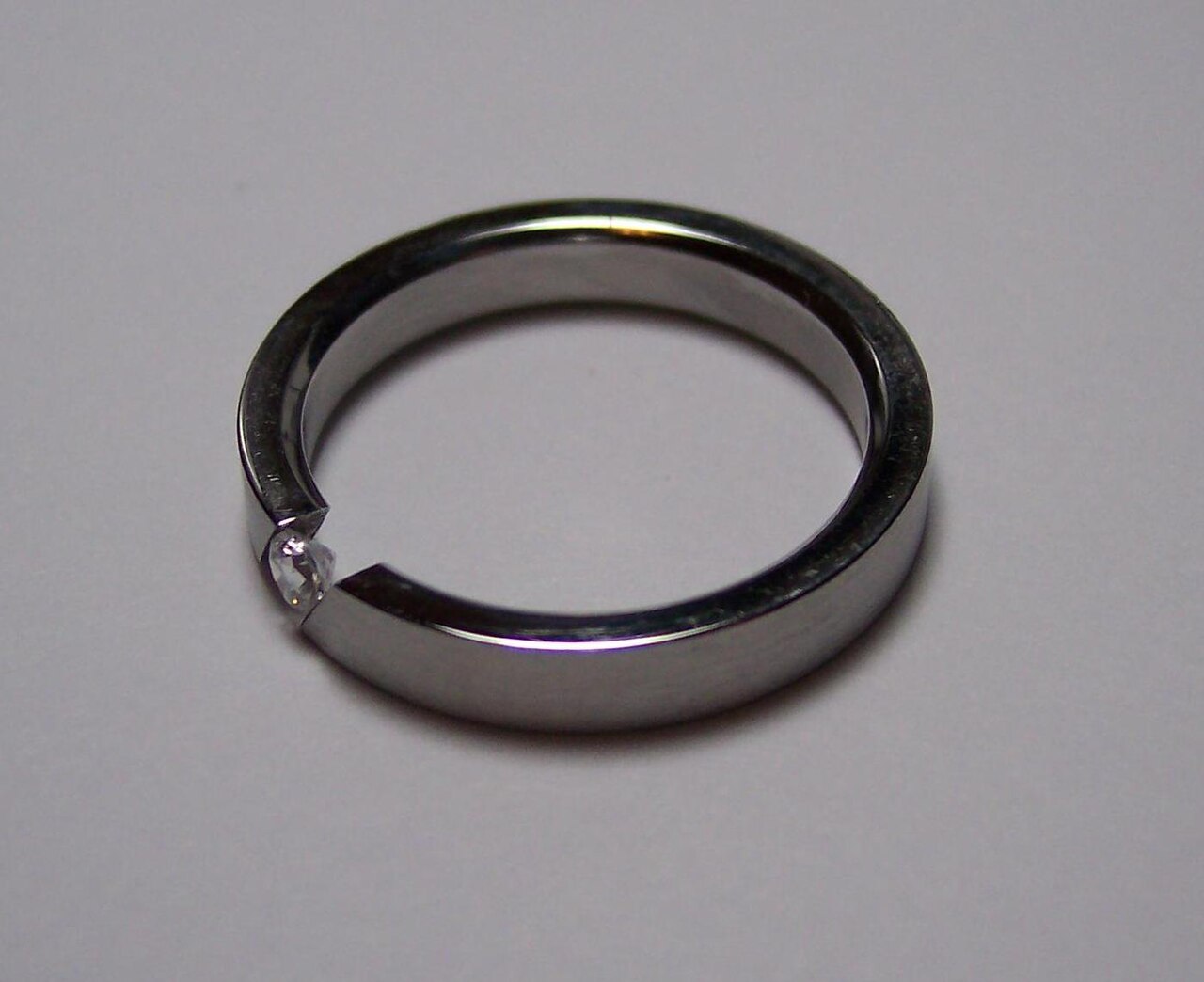
The stone appears to float, held by nothing but the spring force of the metal pressing in from two sides. Striking, and the riskiest setting on this page.
Properties
| Property | Value | Authority |
|---|---|---|
| How it holds the stone | The ring acts as a spring: the stone is held in place by the inherent force in the two opposing sides of the metal setting, and appears to be suspended in air. [1] | — |
| Security | GIA is explicit that although striking and unusual, a tension setting may be a riskier choice for an engagement ring. [1] | — |
| Light access | There is no metal underneath the stone, so light reaches it from below as well as above. [2] | — |
| What to watch for | One genuine practical advantage: with no metal beneath it the stone cleans easily. GIA notes that diamonds are natural grease magnets and look duller when dirty, which is the most common reason a stone seems to lose its life. [2] | — |
Sources
- GIA — How to Protect Your Diamond Engagement Ring — Gemological Institute of America (GIA 4Cs, How to Protect Your Diamond Engagement Ring)
- GIA — What is a Solitaire Setting? — Gemological Institute of America (GIA 4Cs, What is a Solitaire Setting? (6 June 2012))