Kunzite
SpodumeneJewelryWiki Editorial·5 sources·Reviewed 2026-08-04
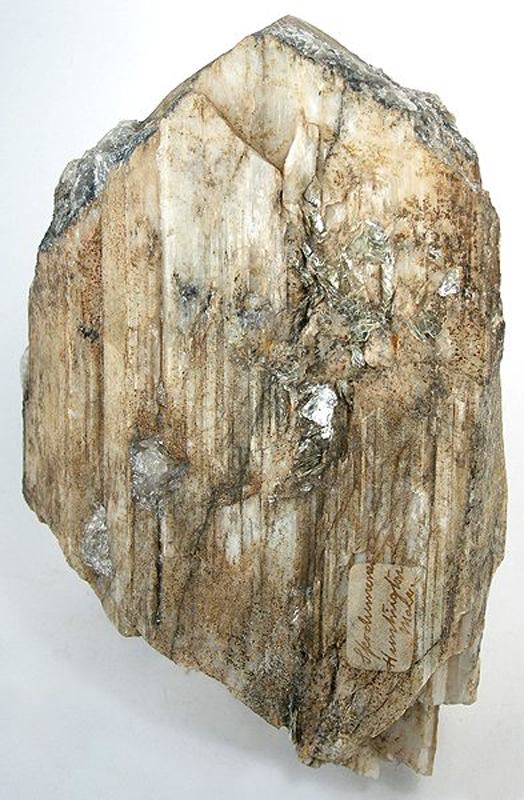
Named by GIA among the gems that fade under prolonged light, alongside tanzanite and topaz.
Properties
| Property | Value | Authority |
|---|---|---|
| Mohs hardness | 6½–7 [1] | — |
| Refractive index | 1.660–1.681 [1] | — |
| Chemical formula | LiAlSi2O6 Read from the species entry, Spodumene. A variety shares its species’ formula — unlike hardness or density, which vary with composition and are not inherited here. [5] | — |
| Crystal system | Monoclinic [2] Read from the species article, Spodumene. | — |
| Common treatments | Kunzite is a spodumene, and GIA warns specifically about this group: some varieties of beryl and spodumene are irradiated to deepen an inherent colour or change it altogether, and the irradiated colour tends to be SHORT-LIVED, fading on exposure to bright light. This is the treatment most likely to disappoint after purchase rather than at it. [4] | — |
| Care cautions | NEVER use an ultrasonic cleaner — GIA names this among the gems susceptible to heat and temperature change, which should be kept out of an ultrasonic REGARDLESS of whether they have been treated. Use warm soapy water or a solution formulated for delicate gems. [3] | — |
Sources
- International Gem Society — reference charts (Mohs hardness, specific gravity, refractive index) — International Gem Society (IGS reference charts)
- Wikipedia — mineral article infoboxes (crystal system) — Wikipedia contributors (Wikipedia mineral infoboxes)
- GIA — Ultrasonic Cleaners for Gems: What You Need to Know — Gemological Institute of America (GIA 4Cs, Ultrasonic Cleaners for Gems)
- GIA — An Introduction to Gem Treatments — Gemological Institute of America (GIA, An Introduction to Gem Treatments (Robert Weldon))
- Handbook of Mineralogy — Mineral Data Publishing / Mineralogical Society of America (Handbook of Mineralogy, Mineral Data Publishing)